Promoter Holdings and Lock-In Planning Before an SME IPO
Reviewed on: 8 October 2026. Reviewed by Abhipra RTA Team.
Before an SME IPO, the promoter cap table must be accurate, dematerialised where required and mapped to the applicable lock-in rules. Lock-in planning starts before the offer document, because ineligible shares, unresolved transfers or inconsistent data can disrupt the filing workflow.

Current promoter contribution and lock-in structure
SEBI ICDR Regulation 237 requires minimum promoters’ contribution of at least 20% of the post-issue capital for an SME issue, subject to the regulation’s eligibility conditions. Under Regulation 238, that minimum promoters’ contribution is locked in for three years from allotment. The current SME framework also applies a two-year lock-in to 50% of promoter holding above the minimum contribution, with the remaining 50% locked in for one year, subject to the regulations and issue-specific facts.
The issuer should not treat these durations as the full answer. Regulations 239 to 243 cover lock-in of shares held by persons other than promoters, recording of non-transferability, pledges and transferability. The offer document and current exchange conditions must identify the actual shares, holders and applicable exceptions.
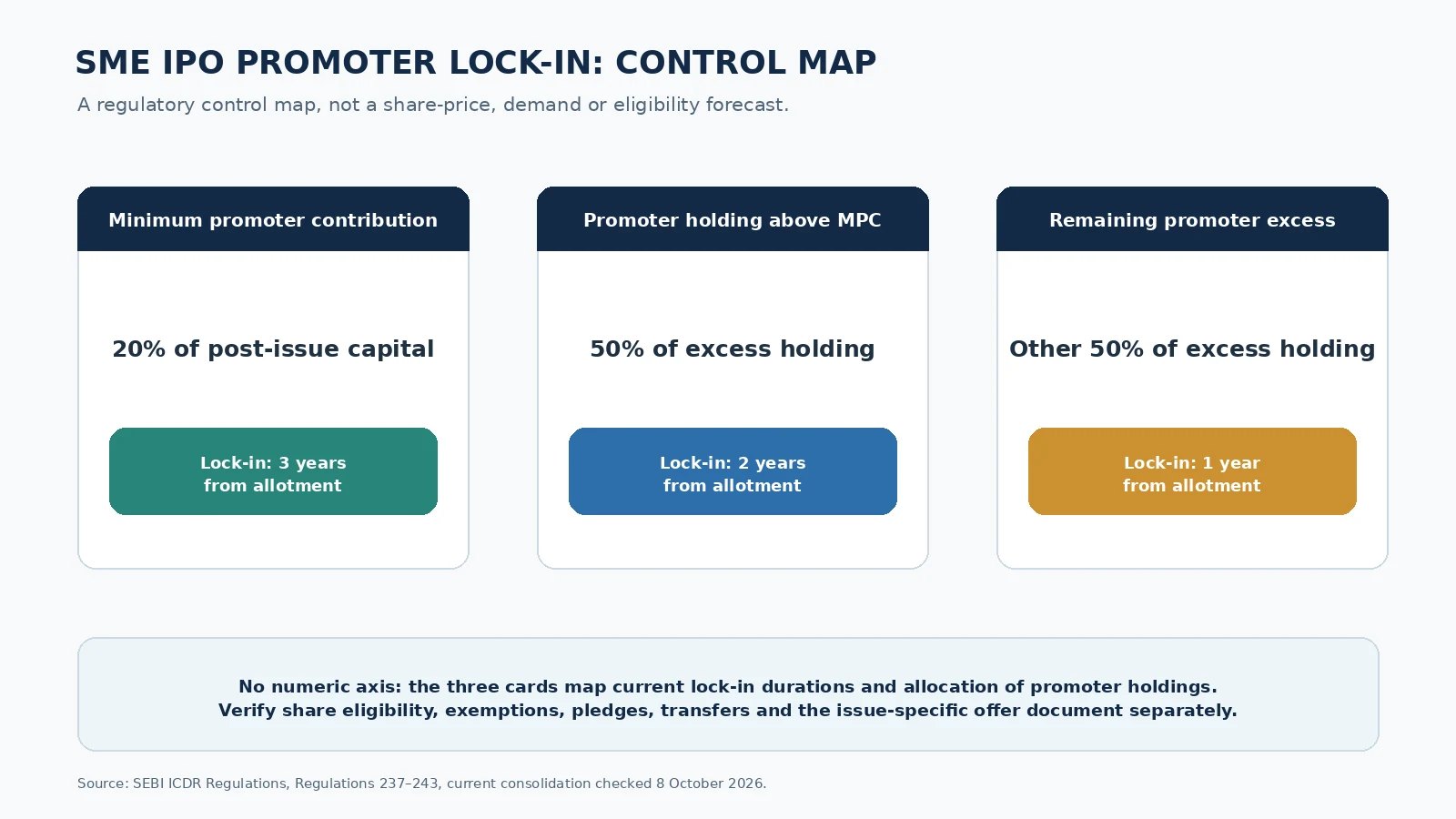
This is a control map without a numeric axis. The cards show the 20% minimum promoter contribution and the two portions of promoter holdings above it. The inference is limited: the durations guide planning, while eligibility, exemptions, pledges, transfers and disclosure treatment must be checked for the specific issue.
Demat, cap-table and evidence controls
For SME issues, ICDR Regulation 230 requires depository arrangements for specified securities already issued and proposed to be issued, and promoter specified securities in demat form. The RTA, company secretarial, finance and adviser teams should reconcile the promoter and promoter-group register, past allotments, transfers, encumbrances, ISIN details and offer-document tables before filing.
NSE’s Emerge process page requires the draft prospectus and IPO-vetting checklist, and its eligibility page highlights current issuer and promoter-related conditions. These exchange pages are operational references; they do not replace issuer-specific due diligence or the legal text.
Filing sequence for promoter holdings
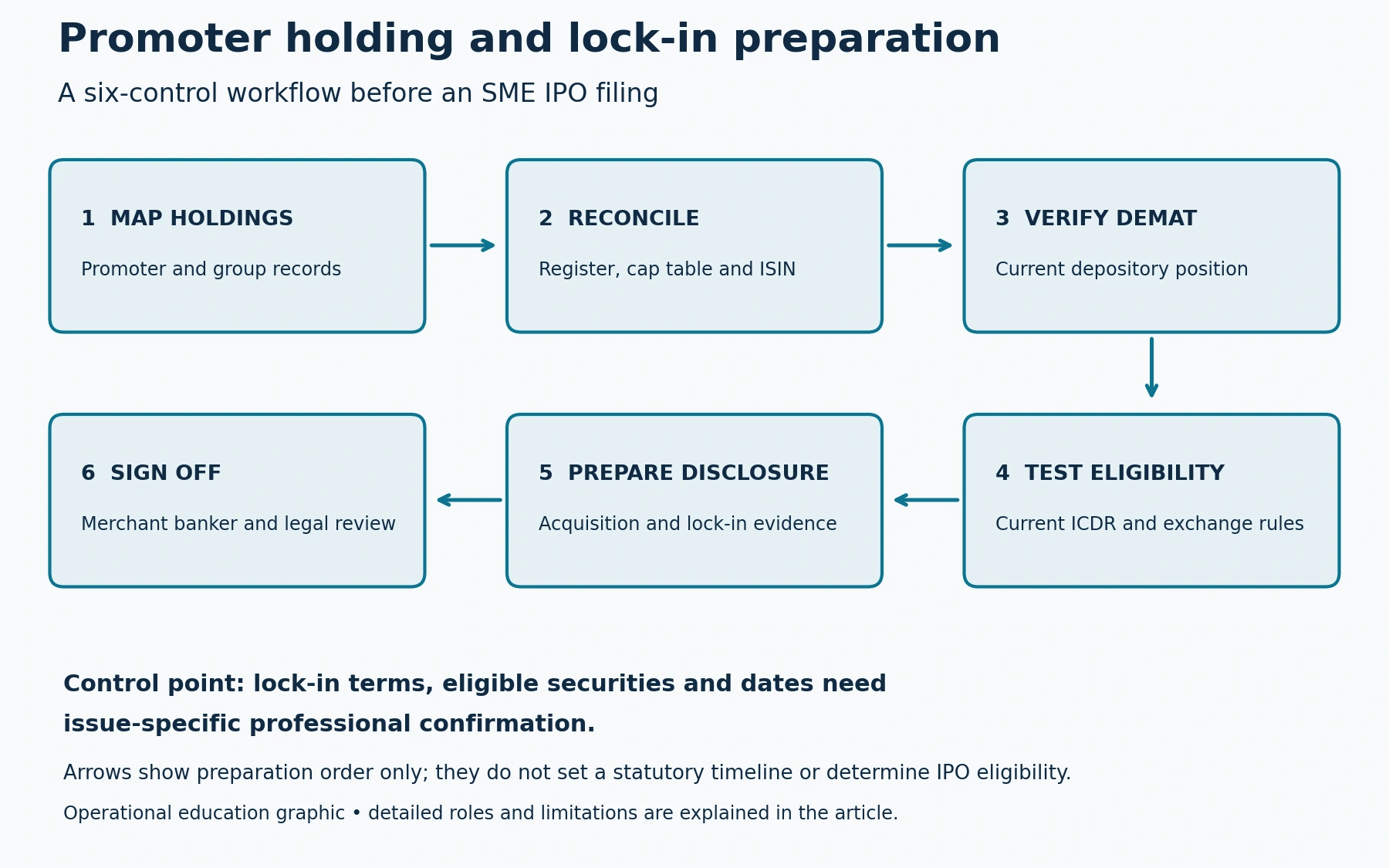
The workflow moves from a reconciled cap table to eligibility testing, demat confirmation, lock-in mapping, encumbrance review and a frozen filing data set. The final note explains that lock-in recording and disclosure remain part of a wider compliance review.
How Abhipra can assist
Preparing for an SME IPO or main-board IPO and need a Registrar-to-an-Issue/RTA workstream?
Contact Abhipra RTA Services at rtaservices@abhipra.com, call 011-42390783, or contact +91-9818080700.
Official source links
- SEBI ICDR Regulations, 2018, last amended 21 March 2026 — Regulations 230 and 237–243.
- SEBI’s 8 April 2026 lock-in mechanism circular.
- NSE Emerge requirements and process.
- NSE Emerge eligibility criteria.
Disclaimer
This article is for general educational information and does not constitute legal, tax, investment or transaction advice. Applicability depends on the company's and investor's facts and on the law, circulars and depository instructions in force on the relevant date.