
NPS Contributions: What the Latest Official Data Can—and Cannot—Tell You
An official NPS number can be useful context, but it cannot tell you whether your own retirement plan is on track. Here is a practical way to read contribution data without confusing deposits, account value and investment performance.

Start with the label, not the headline
PFRDA’s statistics library includes an M5 series for scheme-wise NPS contribution, available since December 2014. That makes it useful for seeing the flow of money into scheme categories over time. It is not a return table and it is not a ranking of what an individual subscriber should choose.
The current PFRDA website snapshot gives scale: 2.35 crore NPS subscribers and Rs. 17.39 lakh crore of NPS assets under management, as at 11 October 2026. These are aggregate system figures. They cannot forecast an individual corpus, pension or return.
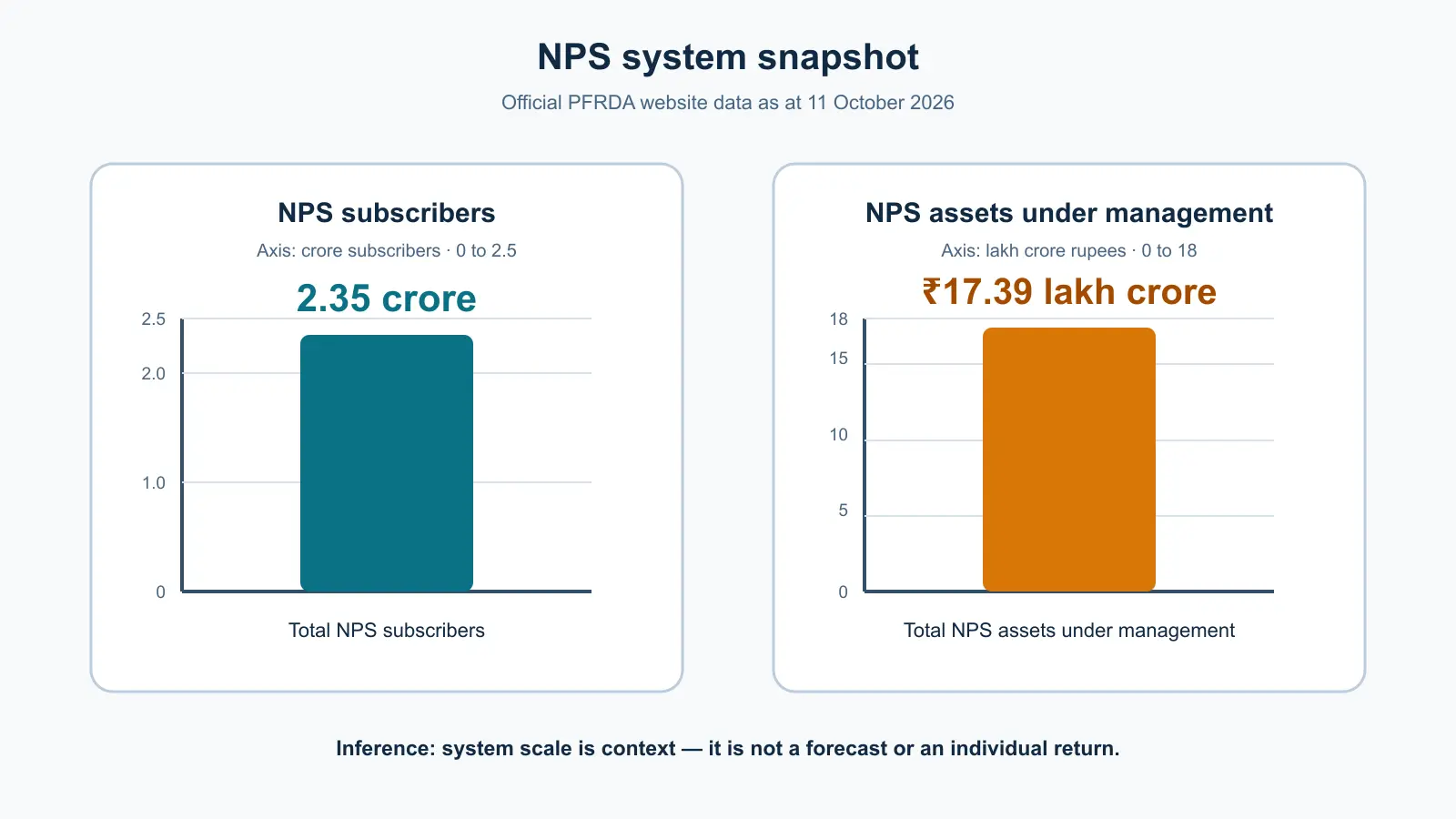
The left chart’s vertical axis is crore subscribers from 0 to 2.5. The right chart’s vertical axis is lakh crore rupees from 0 to 18. The separate axes are deliberate: subscriber count and assets under management are different measures and must not be compared by bar height. The inference is limited to system scale, not individual performance.
Contribution, NAV, units and corpus are different things
An NPS contribution is money paid into the account. After the required operational steps, the pension fund invests it according to the choice recorded with the CRA, scheme NAV is declared, units are allocated, and those units appear in the subscriber’s account. NPS is market-linked, so value can change with NAV; a contribution figure alone does not show gain or loss.
For an account review, use the Statement of Transactions and check:
- the contribution date and amount against the payment acknowledgement;
- the pension fund and asset allocation recorded for the account;
- the NAV and units allotted; and
- whether the credited units and current value appear after the normal processing window.
A four-step data check before acting
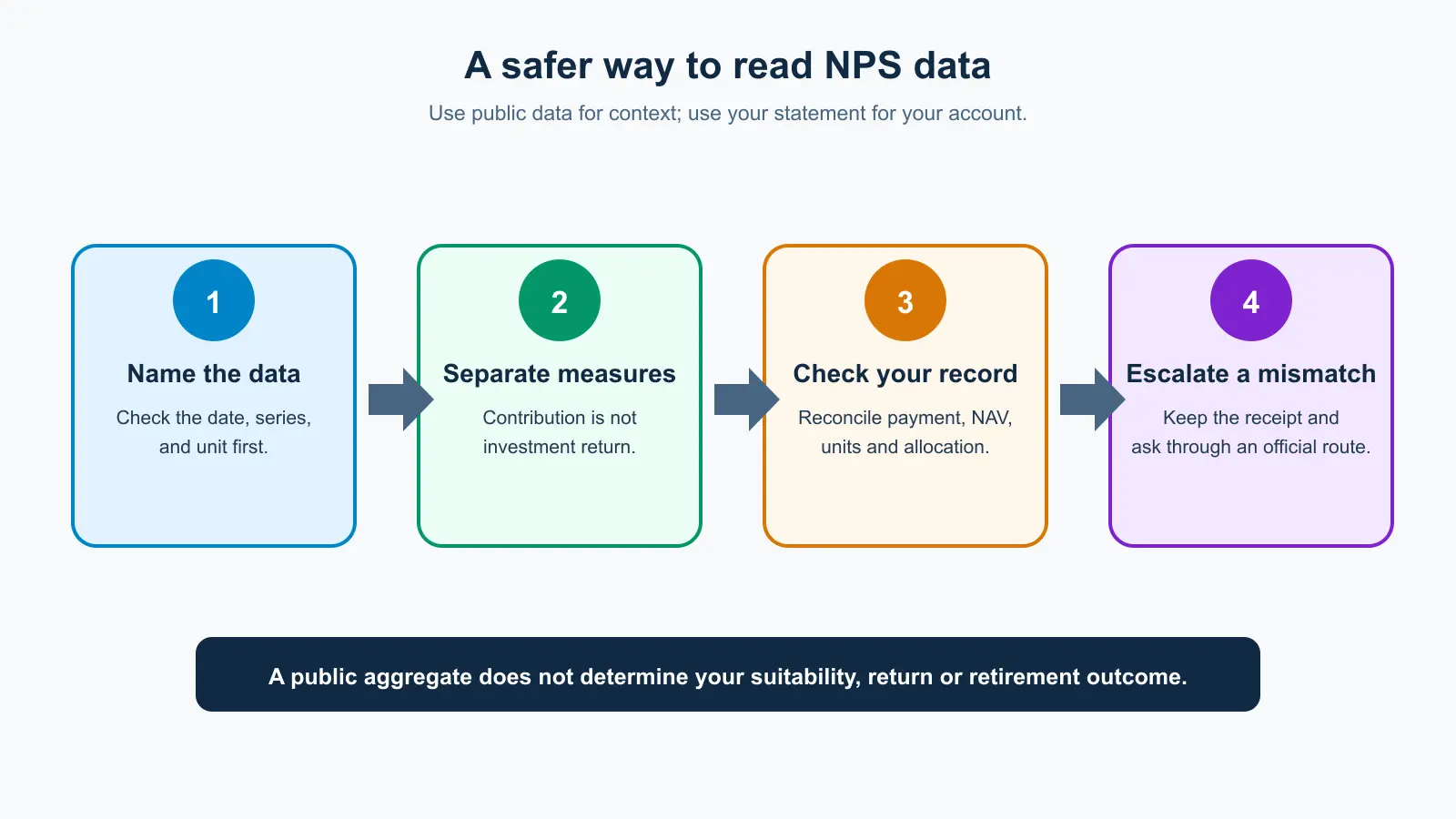
The workflow is intentionally short. First identify the date, series and units. Next keep contribution separate from performance. Then reconcile your payment, NAV, units and allocation in your account record. If something does not match, retain the acknowledgement and use an official service route rather than acting on a message, an unverified link or a public chart.
What public NPS data is good for
Public system data can help an investor ask better questions: Is a number current? Is it a contribution, AUM, subscriber count, NAV or return? What is the unit? Does the comparison use like-for-like dates?
It should not replace a suitability review. Investment choice, time horizon, liquidity needs, risk capacity, contribution continuity and retirement-income requirements remain personal decisions. Past data and aggregate growth do not guarantee returns.
Keep your account review practical
Abhipra has acted as a Point of Presence for 17 years and can help subscribers understand NPS account-servicing steps. For service information, visit Abhipra NPS & Pension services. Existing or prospective subscribers can use the approved Abhipra NPS account-opening route or Abhipra NPS SIP route where appropriate.
Source links / disclaimer
- PFRDA homepage system milestones — system snapshot cited above, as at 11 October 2026.
- PFRDA statistical data library — includes the M5 scheme-wise NPS contribution data series.
- PFRDA All Citizen Model FAQs — contribution-to-unit-credit process and Statement of Transactions access.
- NPS Trust — NPS is a market-linked voluntary contribution scheme.
This article is for education, not personalised investment, tax, legal or retirement advice. Rules, processing timelines and platform features can change; verify current requirements through official channels before acting.