
Investor Protection Checklist: Secure Your Investments, Records and Rights
Investor protection is a routine, not a one-time form. Verify who you deal with, protect access, inspect records and know how to raise a supported complaint.

Start with the entity and the evidence
SEBI’s Investor Charter says investors should deal with SEBI-recognised market infrastructure institutions and SEBI-registered intermediaries, read documents, track statements and preserve transaction records. It also says not to share critical information such as account details, login IDs, passwords or DIS. Read the SEBI Investor Charter.
Keep contract notes, account statements, mutual-fund CAS, receipts and complaint acknowledgements together. Do not make investment decisions from anonymous tips, screenshots or callers requesting an OTP.
A data point on education, not a safety score
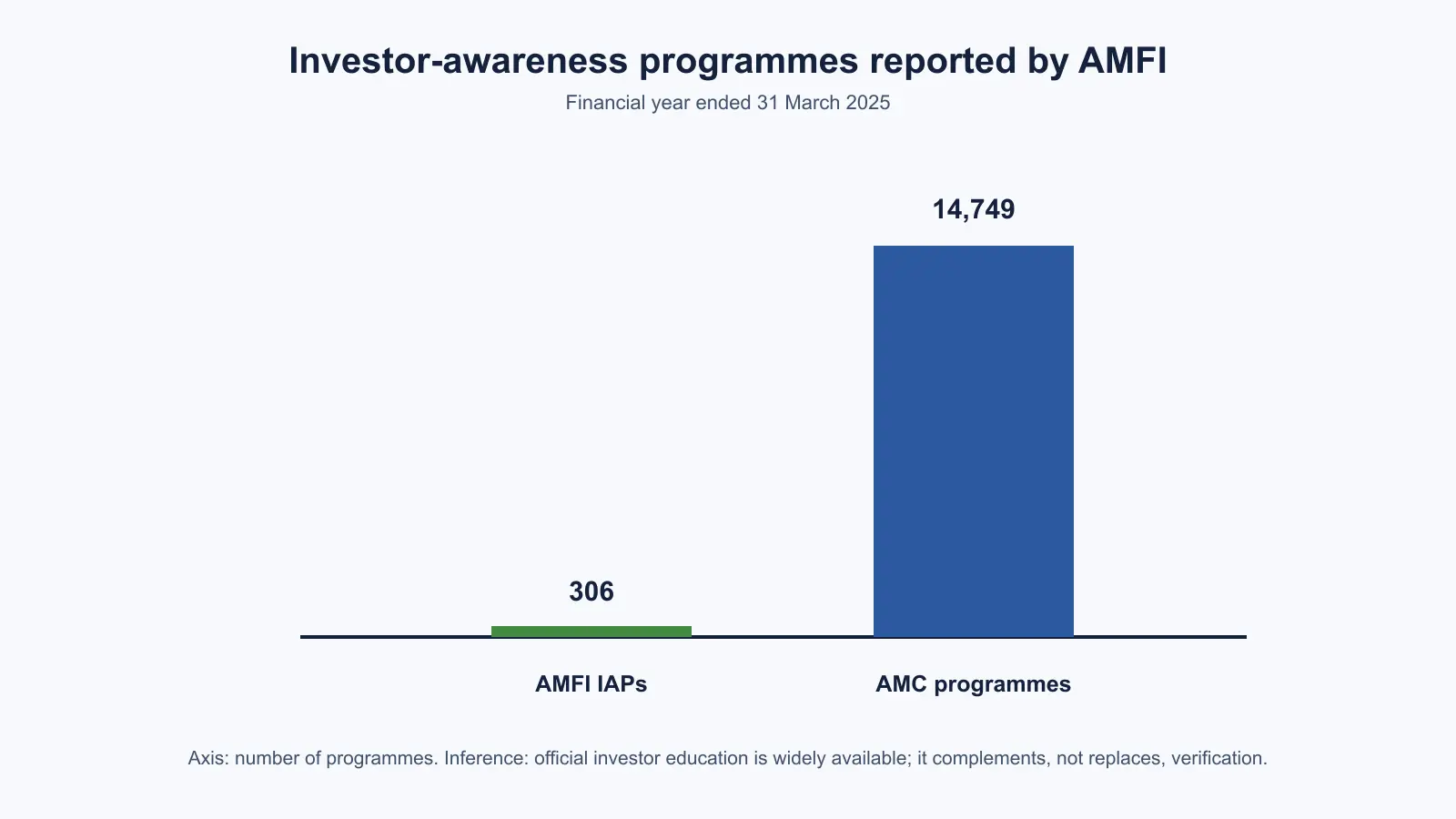
AMFI reports that, in the financial year ended 31 March 2025, it conducted 306 Investor Awareness Programmes and AMCs conducted 14,749 programmes. The chart’s vertical axis is number of programmes; its categories are AMFI IAPs and AMC programmes. The inference is that official education is widely available, but it complements—not replaces—verification. See AMFI’s programme report.
A simple protection routine

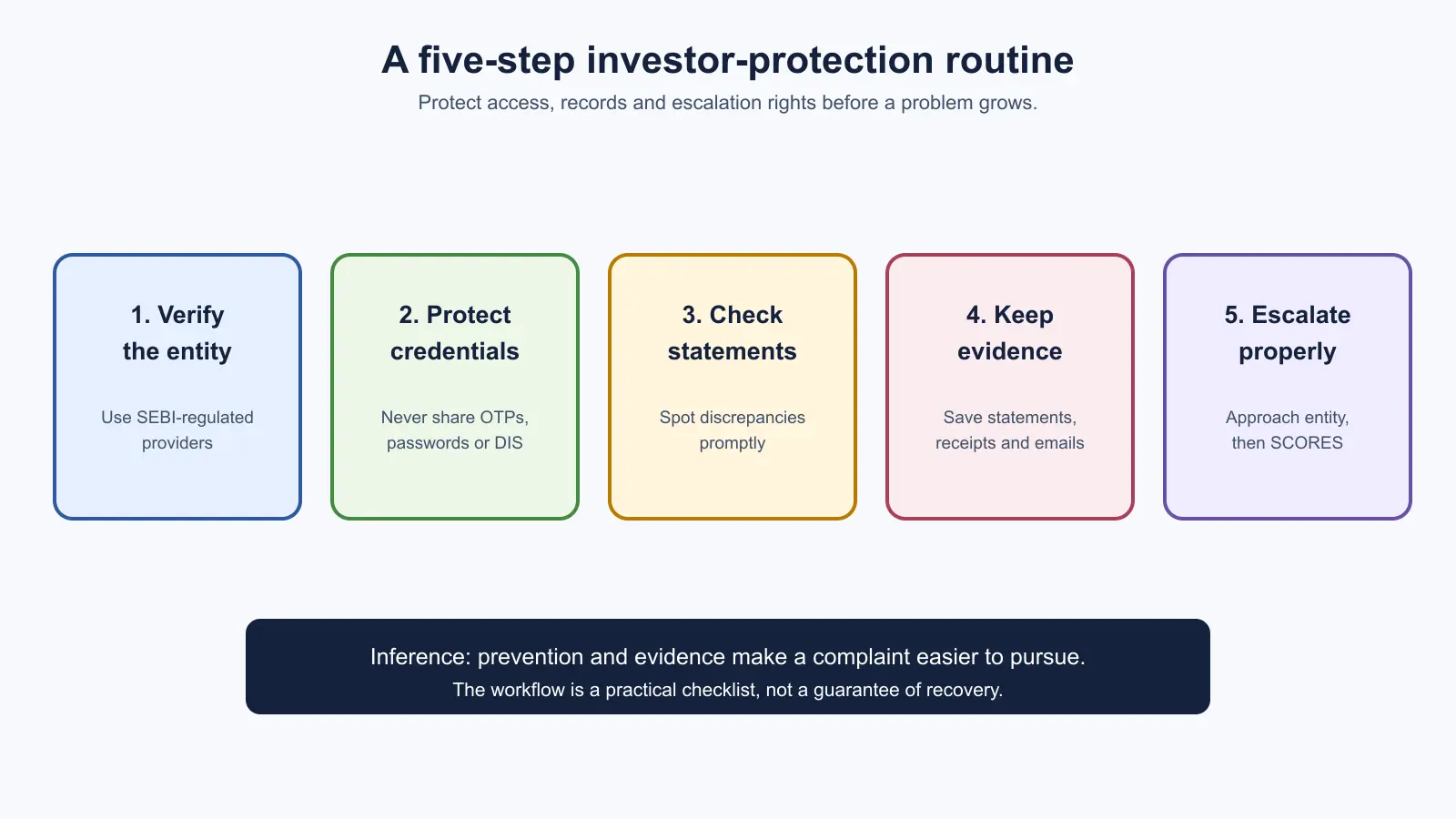
- Verify the entity. Use regulated providers and official websites.
- Protect credentials. Never disclose passwords, OTPs, PINs or DIS details.
- Check statements. Raise discrepancies promptly with the provider.
- Keep evidence. Save statements, receipts, emails and complaint numbers.
- Escalate properly. First approach the concerned entity. If unresolved, SEBI says investors may use the SCORES platform for eligible securities-market grievances. Read SEBI’s grievance guidance.
When a complaint needs escalation
SCORES is SEBI’s online grievance-redressal facilitation platform for complaints against listed companies, regulated intermediaries and market-infrastructure institutions. The platform says a complaint should first be taken up with the concerned entity, and its FAQ notes that supporting documents and a specific complaint are important. Read the SCORES FAQ.
For mutual funds, AMFI says the scheme’s Investor Relations Officer/contact person is identified in the Scheme Information Document and on the AMC website. Read AMFI’s investor-service guidance.
Checklist
- Verify provider registration and official contact routes.
- Use strong unique credentials; never share OTPs or remote-device access.
- Reconcile holdings and transactions with statements.
- Keep nominations and contact details current where applicable.
- Report suspected fraud immediately through official channels; retain evidence.
- Use SCORES only for eligible, documented securities-market grievances after first approaching the entity.
Source Links
- SEBI Investor Charter
- SEBI grievance-redressal guidance
- SCORES FAQ
- AMFI investor-awareness report
- AMFI investor-service guidance
Disclaimer
This is investor education, not legal, investment or recovery advice. Outcomes depend on facts, evidence and the applicable process. Investments in securities are subject to market risks. Reviewed by Abhipra Research / Compliance Team.