Walk-Forward Testing: A Simple Check Against Overfitting
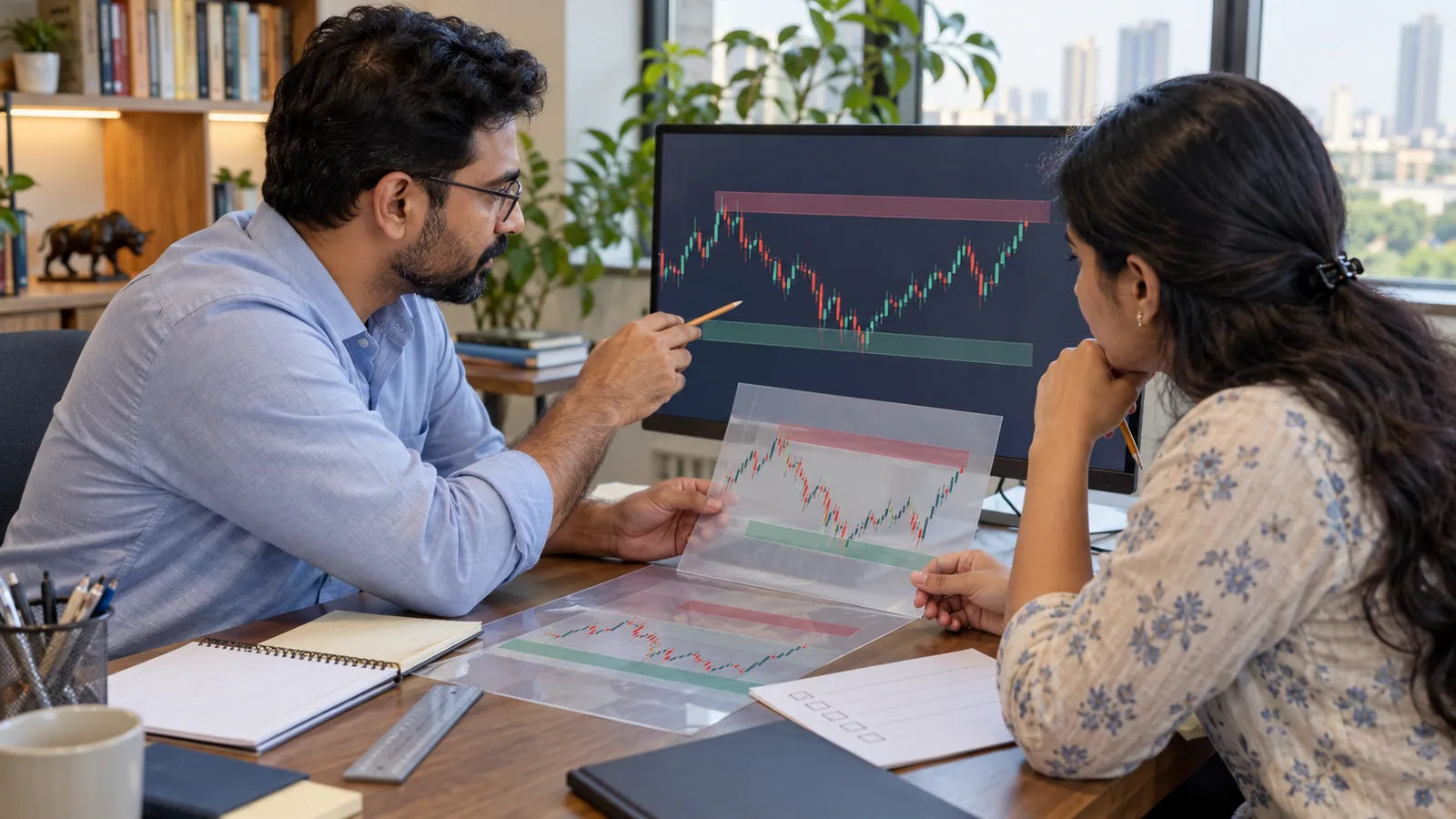
A backtest can look persuasive because it uses history that is already known. Walk-forward testing is a stricter habit: choose or tune rules on an earlier period, then examine the next period without changing those rules. It cannot prove future profitability, but it can expose strategies that only fitted one historical sample.

Why a single backtest can mislead
Overfitting happens when strategy rules become too closely tailored to the noise, conditions or accidental patterns of one dataset. Adding many filters, parameters or exceptions may improve a historical result while reducing the chance that the same rules will hold up elsewhere.
NSE’s algorithmic-trading curriculum includes strategy development, backtesting, risk management, audit and compliance—not just code or order placement. See the NSE Algorithmic Trading Module.
How walk-forward testing changes the question
Instead of asking “what settings produced the best historical result?”, a walk-forward review asks whether settings chosen before a later period remain reasonably behaved in that later period. A simple sequence is:
- Lock the available data, dates, execution assumptions and costs.
- Use an initial historical window to select a limited set of rules.
- Freeze the rules and assess the next, unseen window.
- Move both windows forward and repeat without rewriting the past.
- Compare results across windows, including weak periods and implementation frictions.

What the test must not hide
A useful validation record should document the data source, missing-data treatment, corporate-action handling, timestamps, universe selection, survivorship assumptions, order type, liquidity limits, brokerage, statutory charges and slippage. A strategy that appears viable before costs may not remain viable after realistic execution assumptions.
SEBI’s retail-algo framework focuses on safeguards, audit trails and controls around algorithmic participation. Its broker-technology requirements include monitoring and stopping algorithms that behave unexpectedly, as well as preserving relevant records. Read SEBI’s 2025 retail-algo circular and its stock-broker technology controls.
| Stage | Permitted activity | Control that protects the test |
|---|---|---|
| Training window | Define a small, documented rule set and model parameters. | Use only observations available before the test window begins. |
| Next test window | Apply frozen rules and capture the outcome. | Do not retune after seeing the outcome. |
| Roll-forward review | Advance the windows and repeat the same process. | Maintain version history, assumptions and negative results. |
The illustrative chart: axes and inference
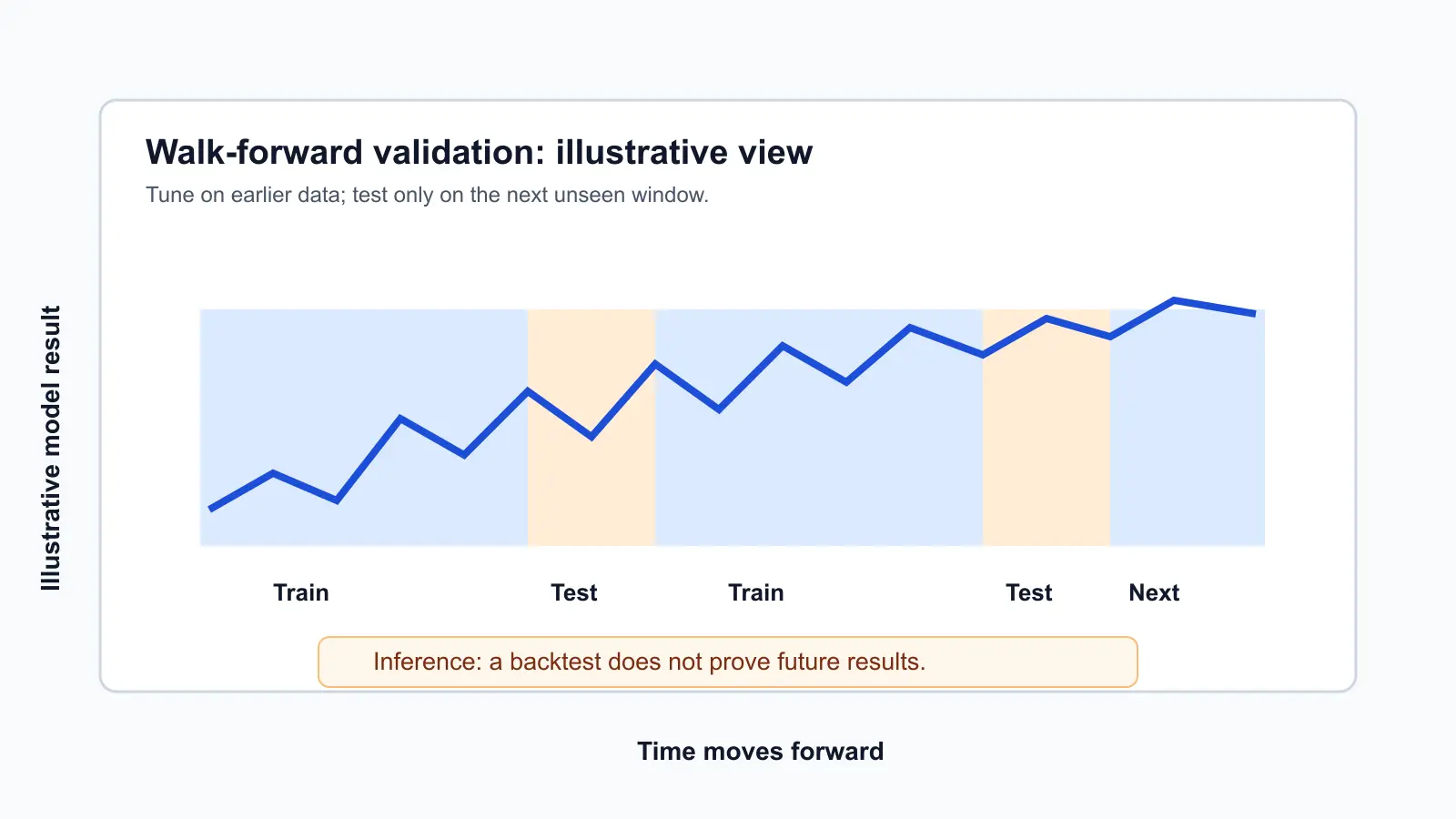
The horizontal axis shows time moving forward; the vertical axis is an illustrative model result, not market data or a return series. Blue areas are earlier training/tuning windows and orange areas are later unseen test windows. The inference is limited: passing one or several historical tests cannot establish future performance, but keeping the test window separate makes hindsight fitting easier to detect.
A controlled validation workflow
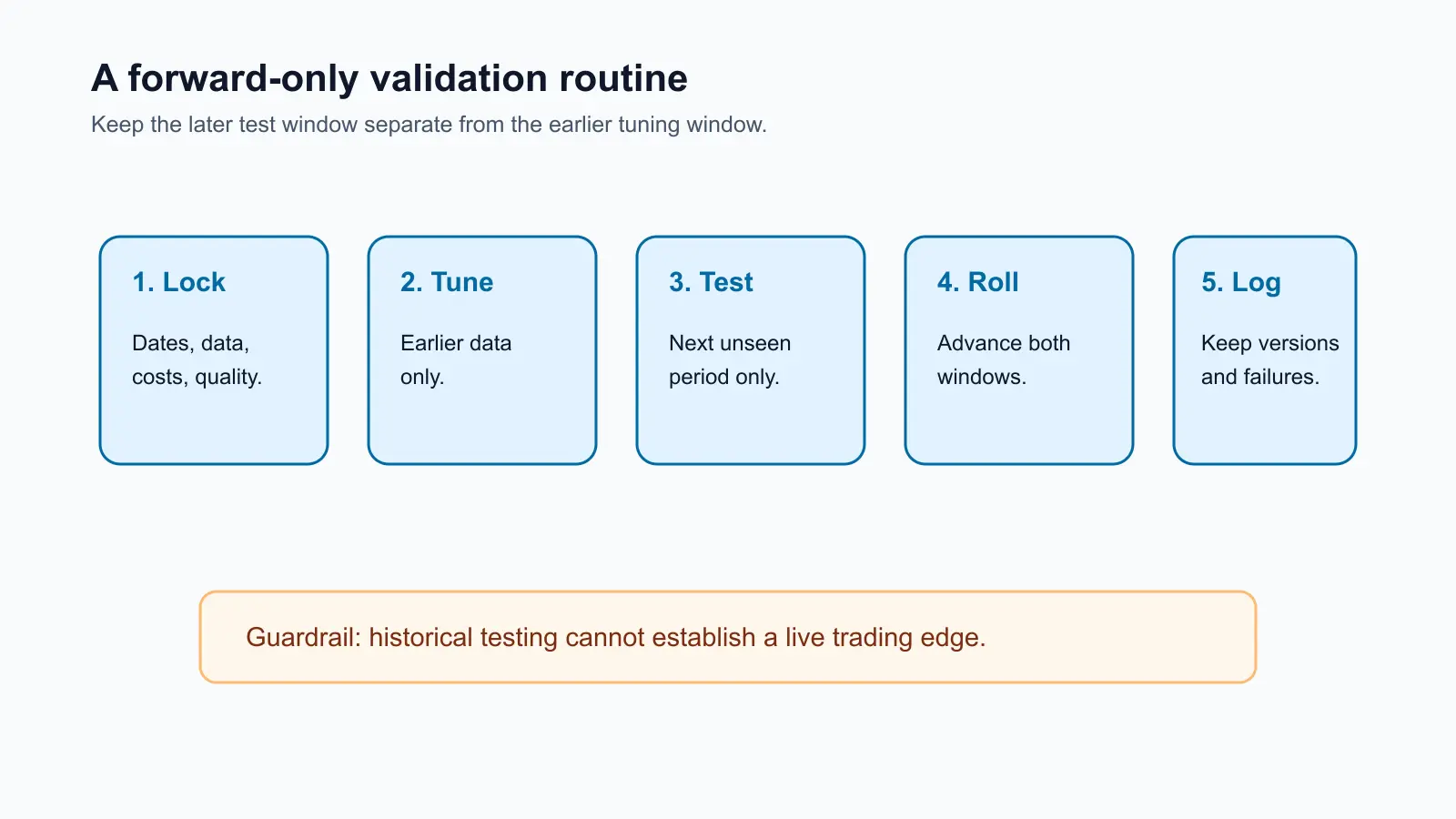
- Lock data definitions and realistic execution assumptions.
- Tune only on the earlier window.
- Test the next period without retuning.
- Roll both windows forward and repeat.
- Preserve versions, results, failure notes and risk-control evidence.
Common mistakes
- Selecting the final parameter set after viewing every test window.
- Ignoring delisted securities, data revisions or missing records.
- Omitting brokerage, statutory charges, spreads, market impact or slippage.
- Treating a high historical win rate as proof of risk-adjusted robustness.
- Moving from a backtest straight to live execution without operational controls.
Investor checklist
- Are training and test windows chronologically separate?
- Were rules frozen before the later window was assessed?
- Do the results survive realistic execution costs and liquidity limits?
- Is the strategy evaluated across different market conditions, including weak periods?
- Are kill switches, access controls, logs and human oversight documented before deployment?
For related education, see Algo Trading for Retail Investors: What to Know Before You Automate, In-Sample vs Out-of-Sample Testing for Trading Strategies, and Why Risk Management Beats Prediction in Trading.
Source Links
- SEBI: Safer participation of retail investors in algorithmic trading
- SEBI: Stock-broker technology and audit controls
- NSE: Algorithmic Trading Module
- NISM: Algorithmic Trading overview
Reviewed by Abhipra Research / Compliance Team.
Disclaimer
This article is for educational and informational purposes only. It should not be considered investment advice, trading advice, tax advice or insurance advice. Investments in securities market are subject to market risks. Please read all related documents carefully before investing. Past performance is not indicative of future returns. Please consult a qualified financial advisor, tax advisor or insurance advisor before making any financial decision.