PFRDA’s Proposed PoP Rule Changes: What NPS Subscribers Should Know
PFRDA has invited comments on proposed changes to the rules for Points of Presence (PoPs), the intermediaries that support NPS onboarding and servicing. The consultation closes on 2 October 2026. These are proposals for discussion; they are not rules currently in force.

What the consultation proposes
The draft would organise NPS PoP distribution into two modes. Physical mode would involve in-person as well as mixed physical and digital servicing. Digital mode would be an exclusive digital onboarding and servicing route using platforms authorised by PFRDA.
For physical-mode NPS PoPs, the draft proposes at least five branches or offices in India, along with specified technology and eligibility requirements. It also proposes widening eligibility for digital-mode applicants, including certain regulated entities and legal forms such as LLPs, societies, associations and trusts, subject to the stated requirements. The detailed tests differ by applicant type and mode, so an organisation should review the full draft before assessing its position.
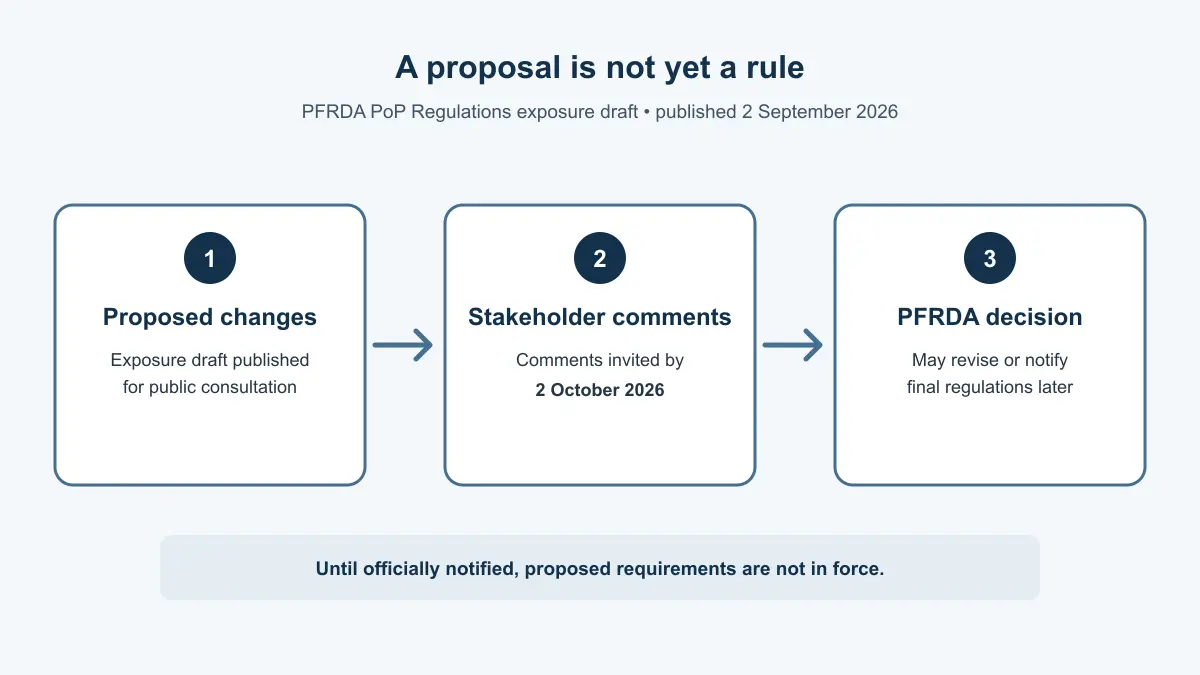
The sequence matters: the document is an exposure draft, stakeholders may submit comments, and PFRDA may then decide whether to revise or notify regulations. No implementation date or final outcome is established by the draft itself.
Fees and application timelines in the draft
The proposal would change the application fee for physical-mode registration from ₹10,000 to ₹25,000, plus applicable taxes and levies. It proposes no application fee for digital-mode registration. It also sets out acknowledgement, deficiency communication and application disposal timelines, including disposal within 30 days after complete information is received.
The draft would replace the five-year renewal cycle with an annual fee proposed at 1% of charges earned, subject to a minimum of ₹3,000 per year. These amounts describe the proposal only; they should not be treated as the current fee schedule.
What this could mean for subscribers
The stated aim is to broaden distribution, particularly in last-mile and underserved areas, and support subscriber servicing. If adopted, the changes could affect which organisations can seek PoP registration and how they deliver services. They do not themselves change an NPS subscriber’s investment allocation, returns, withdrawal entitlement or account balance.
For now, subscribers should continue to use their existing authorised NPS channels and check current service and charge disclosures before a transaction. A regulatory consultation is not an instruction to change an account or make a contribution.
Who may want to review the draft
Existing PoPs, prospective applicants, financial-service firms, cooperatives, digital platforms and organisations that support NPS distribution may wish to compare the proposal with their operating model. Review the full text for mode-specific conditions, financial and governance tests, collection-account provisions, reporting duties and provisions covering distribution agents, which the draft proposes to call “NPS Mitras.”
Stakeholders may submit comments through the web form on PFRDA’s website or by email to regulation-pop@pfrda.org.in, using the format in the draft. The stated deadline is 2 October 2026. Check the official consultation page for any update before submitting.
For subscriber support, visit Abhipra’s NPS & Pension services. Abhipra has acted as a Point of Presence for 17 years.
Frequently asked questions
Are the proposed fees already applicable?
No. They appear in an exposure draft and are proposals. Check PFRDA’s current regulations and fee disclosures for requirements in force.
Does the proposed five-branch condition apply to digital-only PoPs?
The five-branch or office condition is set out for physical-mode NPS PoPs. Digital-mode applications have separate proposed eligibility and technology requirements in the draft.
Does this consultation change what an NPS subscriber can withdraw?
The PoP consultation concerns intermediary registration, distribution and servicing. It does not itself amend subscriber investment or withdrawal rules.
Read the proposal before drawing conclusions
The consultation may shape how NPS access and servicing are organised, but its final form depends on PFRDA’s decision after considering comments. Treat each proposed condition as a discussion point until an amended regulation is officially notified.
This article is for investor education and general information, not legal advice. It summarises an exposure draft and does not describe final or currently applicable rules. Verify the latest position with PFRDA and the relevant authorised intermediary.