NPS for First-Time Investors: Understand Tier I, Choices and Risk Before You Apply Through Abhipra
Starting an NPS account is only one decision. First, understand what Tier I is for, how contributions are invested, and what market risk means for a retirement account. This short guide explains the basics and shows how to begin through Abhipra.

Start with the account structure
Tier I is the default individual pension account in NPS. It is intended for retirement saving, and withdrawals and exit follow PFRDA rules. Tier II is an optional investment account available only when you have an active Tier I account; its withdrawal terms differ. Check the current rules and disclosures before deciding whether to open an optional account.
Know what you are choosing
Under Common Schemes, subscribers choose a registered Pension Fund and an investment approach. With Active Choice, you set the allocation across available asset classes within applicable limits. With Auto Choice, a lifecycle option adjusts the asset mix with age. Neither approach removes market risk or guarantees a return.
PFRDA’s published figures show how equity allocation changes between two age milestones in three lifecycle profiles. The chart reports allocations, not investment performance.
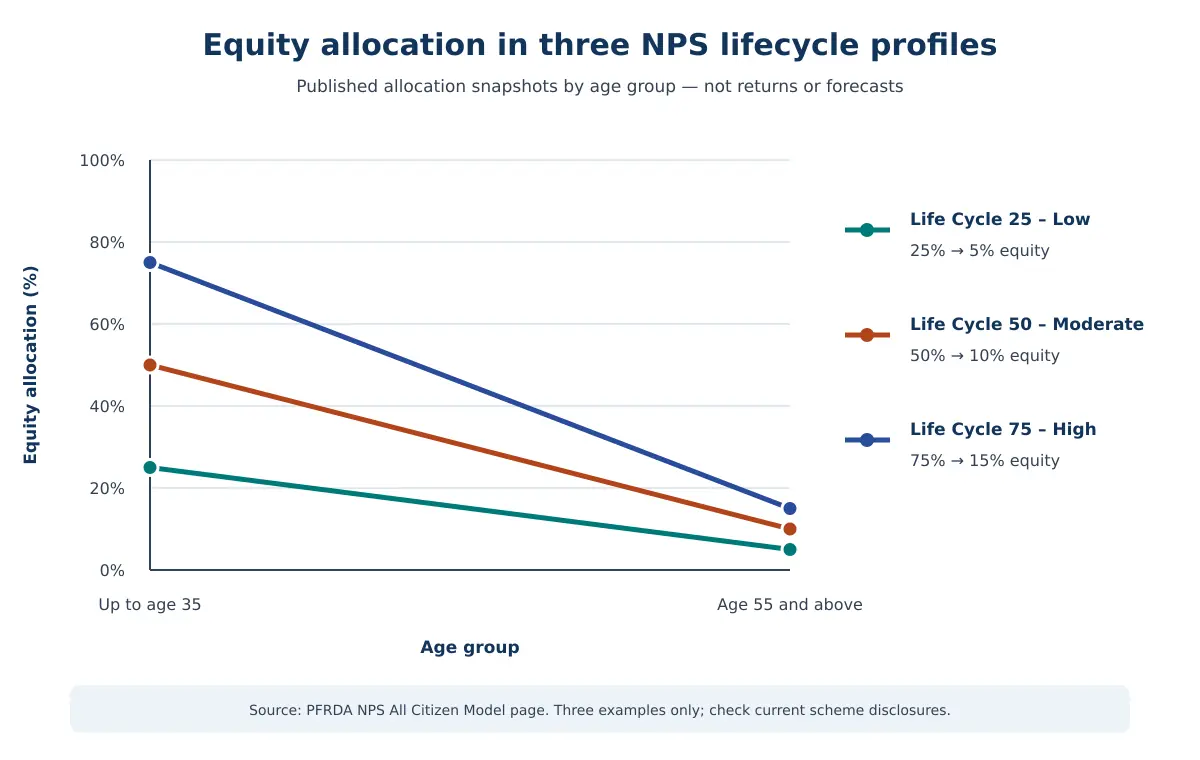
The chart’s horizontal axis compares two age milestones: up to 35 years and 55 years and above. The vertical axis shows equity allocation as a percentage. In these three profiles, the published equity share is lower at 55 and above than up to age 35. These figures describe scheme allocations; they are not return estimates, forecasts, or a recommendation. Actual investment value can rise or fall, and consult current scheme information for the full age-wise allocation.
A quick check before you apply
- Purpose: Is this account for long-term retirement saving? Keep near-term or emergency money separate from long-term investments.
- Account terms: Understand Tier I withdrawal and exit rules before contributing.
- Investment approach: Decide whether you are comfortable setting an allocation yourself or prefer an age-based lifecycle approach. Consider your time horizon and ability to accept market fluctuations.
- Disclosures: Review the current Pension Fund, scheme, charges, KYC requirements, and other application terms. Do not choose a fund only because of a recent return figure.
- Application route: When you are ready, use Abhipra’s NPS account-opening route and follow the current instructions.
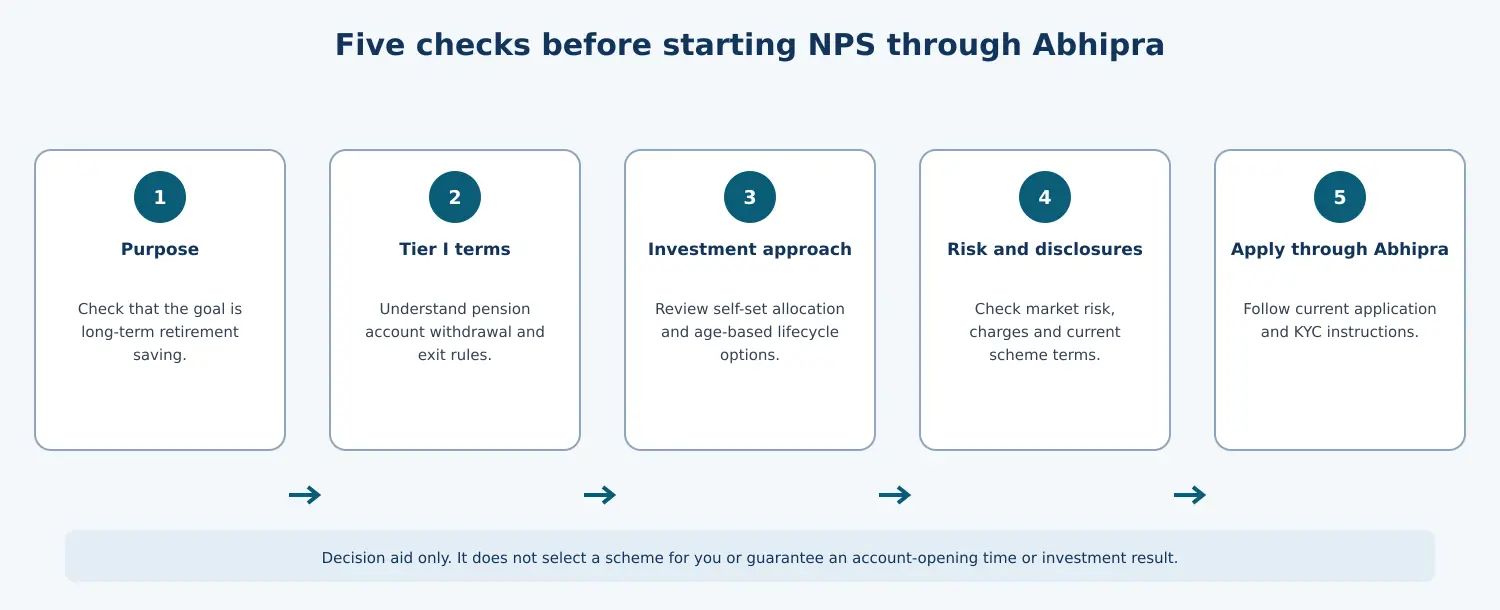
The workflow has no chart axes; it orders the questions to consider before applying. Its inference is that understanding the account and risk first can help you make a more informed application. It does not determine which choice is right for you or promise an account-opening time.
How Abhipra can help
Review Abhipra NPS & Pension services and contact Abhipra if you need help understanding the process or the information requested. Abhipra has acted as a Point of Presence for 17 years. If you decide to proceed, open the account through Abhipra’s route above; account registration is subject to the required checks and current rules.
Frequently asked questions
Is Tier I the same as a regular savings account?
No. Tier I is an individual pension account intended for retirement saving, and withdrawals and exit follow NPS rules. Review those rules before investing.
Does Auto Choice protect me from market losses?
No. Auto Choice changes the allocation according to the selected lifecycle design and age. NPS investments remain market-linked, and returns are not guaranteed.
Do I need to select Active Choice?
Not necessarily. Active Choice asks you to set asset allocations within the applicable limits; Auto Choice uses a lifecycle allocation. Compare the responsibilities and risks with your own circumstances. This article does not recommend one option.
Where can I start an application with Abhipra?
Visit Abhipra NPS & Pension services for service details, then use Abhipra’s NPS account-opening route when ready.
This article is for investor education and is not investment, tax, or legal advice. NPS is market-linked and investment returns are not guaranteed. Eligibility, choices, charges, tax treatment, and exit rules may change. Review current official disclosures and consider your circumstances before investing.