NPS vs Insurance Pension Plans: Read The Wrapper Before You Invest

NPS vs insurance pension plans is not a simple return comparison. It is a wrapper comparison. One route is a regulated pension account with pension-fund and asset-allocation choice. The other is an insurance contract where the product design, charges, surrender rules, annuity options and benefit illustration must be read before money is committed.
The right question is practical: do you need a flexible retirement account, an insurance-linked pension product, or both for different purposes?
PFRDA's homepage milestone data as of 28 June 2026 shows the scale of NPS: 2.25 crore subscribers and Rs 17,22,139 crore AUM. Scale does not make a product automatically suitable, but it does show why investors should understand how the NPS cost and account structure works before comparing it with insurance-based retirement products.
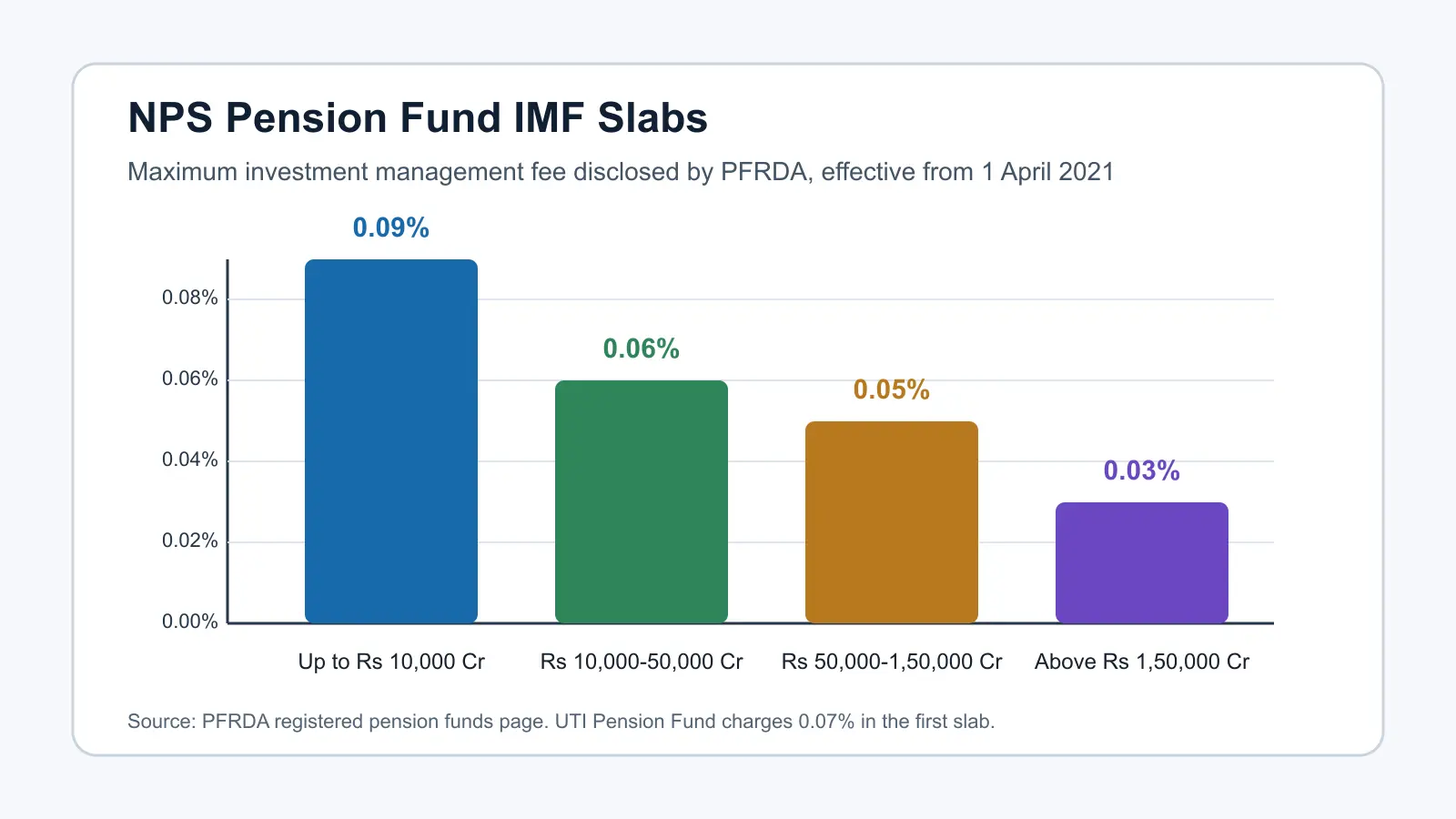
The chart tracks one visible cost layer in NPS: the maximum pension-fund Investment Management Fee disclosed by PFRDA. The slabs are 0.09 percent up to Rs 10,000 crore, 0.06 percent above Rs 10,000 crore to Rs 50,000 crore, 0.05 percent above Rs 50,000 crore to Rs 1,50,000 crore and 0.03 percent above Rs 1,50,000 crore. UTI Pension Fund charges 0.07 percent in the first slab. Other NPS intermediary charges, taxes and PoP charges may also apply, so investors should review the full charge schedule.
Cost: Look Beyond The First Premium Or Contribution
NPS costs are separated across intermediaries such as PoP, CRA, pension fund, trustee bank, custodian and NPS Trust. This makes the cost architecture visible, but it also means subscribers should read each relevant charge line rather than assuming the pension-fund fee is the only cost.
Insurance pension plans work differently because the pension wrapper is an insurance contract. The investor must read the policy document, benefit illustration, surrender conditions, fund management charges where applicable, mortality or rider charges where applicable, premium allocation charges where applicable and annuity purchase rules. A product may look simple at the sales stage but become restrictive if surrender, discontinuance or annuity options are not understood.
Transparency: Which Questions Can You Answer Before Signing?
| Decision Point | NPS | Insurance Pension Plan |
|---|---|---|
| Where is money invested? | As per subscriber-selected pension fund and asset allocation recorded with the CRA. | As per the insurer's product structure, fund option, participating design or annuity design described in the policy document. |
| Can charges be checked? | PFRDA publishes intermediary and pension-fund charge structures. Subscribers should review PoP, CRA, pension fund and other applicable charges. | Charges and deductions depend on the specific insurer and product. Read the benefit illustration, policy wording and surrender-value disclosure. |
| How flexible is contribution? | NPS allows flexible contributions with no upper contribution limit under the All Citizen Model, subject to scheme rules. | Premium frequency, premium term and discontinuance rules are governed by the contract. |
| What happens if you stop paying? | The account treatment depends on NPS contribution and account rules. The subscriber should review minimum contribution and exit provisions. | Discontinuance, paid-up, surrender and revival treatment depends on the policy terms and IRDAI-regulated product design. |
| Who may prefer it? | Investors who want retirement-account portability, pension-fund choice and long-term corpus building. | Investors who specifically want an insurance-linked pension contract and have understood the charges, surrender rules and annuity conditions. |
Flexibility: Match The Product To The Job
NPS may fit better when the investor wants a retirement account that can continue across jobs, business phases and income changes. It can be useful for salaried employees who already have EPF, self-employed professionals who need retirement discipline, and business owners who want a separate long-term pension account outside business cash flow.
Insurance pension plans may fit a different need if the investor wants a contract-led pension product and is comfortable with the product's premium commitment, surrender rules and annuity design. The important point is not to buy a pension plan only because it is labelled as retirement planning. The contract terms decide the real flexibility.

A Five-Point Due Diligence Checklist
Before selecting either route, ask these five questions:
- Can I identify every charge that applies today and later?
- What happens if I stop contributing or paying premiums for one year?
- What part of the money is market-linked, contract-defined or annuity-linked?
- Can I switch investment options, pension fund, insurer or annuity provider, and at what cost?
- Does the product solve my retirement-income problem, or only create another long-term commitment?
For a family retirement plan, NPS and an insurance pension plan should not be mixed casually. Put each product into a purpose bucket: retirement corpus, pension income, risk cover, liquidity reserve and tax planning. If one product is being asked to do all five jobs, the plan needs a second look.
How Abhipra's NPS Desk Can Help
Families comparing NPS with insurance pension plans can connect with Abhipra's NPS Desk for process guidance on NPS account opening, contribution setup, PRAN-related service steps and continuation decisions.
Abhipra has served as a registered Point of Presence for NPS for 17 years, supporting account opening, contribution assistance and subscriber service workflows.
Learn more: Abhipra NPS services
Open an NPS account: Start NPS registration through Abhipra's PoP link
Set up NPS SIP: Create an NPS SIP through Abhipra's PoP link
For assistance, write to nps@abhipra.com.
Source Links
PFRDA NPS All Citizen Model: NPS eligibility, contribution, investment and charges
PFRDA registered pension funds: NPS pension-fund Investment Management Fee slabs
PFRDA NPS FAQ: NPS architecture and intermediary roles
PFRDA pension system milestones: latest NPS subscriber and AUM data
IRDAI consolidated regulations: policyholder-interest and insurance product regulations
IRDAI actuarial department: IRDAI Insurance Products Regulations, 2024
Disclaimer
This article is for investor education and process awareness only. NPS, insurance pension products, annuity terms, surrender values, tax treatment and regulatory conditions can change. Review the latest official documents, product benefit illustration and policy wording, and consult a qualified adviser before making a retirement-planning decision.