NPS Grievance Redressal: How to Track and Escalate a Complaint
A contribution that needs tracing, an unanswered service request or an account correction can leave you wondering whom to contact next. Start with a recorded complaint and keep its reference number: a clear trail makes follow-up easier.

Start with a CGMS token
Register the complaint against the relevant intermediary or nodal office through your Central Recordkeeping Agency’s Central Grievance Management System (CGMS). Use the official NPS complaint registration links to reach your CRA. Save the token number and use it to check the response and status. NPS Trust grievance FAQs explain this process.
If you raised a complaint offline with a Point of Presence (PoP), ask for its CGMS reference. PFRDA’s 2 February 2026 circular directs PoPs to register offline subscriber grievances in the respective CRA’s CGMS. A conversation at a service desk should therefore lead to a traceable record. See the PFRDA circular on registering offline complaints (PDF).
Keep evidence that explains the problem

Build a small complaint file with your PRAN or application reference, contact details, relevant supporting documents and previous correspondence. The NPS Trust grievance policy, November 2025 (PDF) describes the information required for a written complaint.
For a contribution query, include the payment date, amount and transaction reference. Explain what you expected, what actually happened and the correction you are requesting. Share account details only through verified official channels; never share your password or OTP. These are practical record-keeping and security precautions.
The two timelines to track
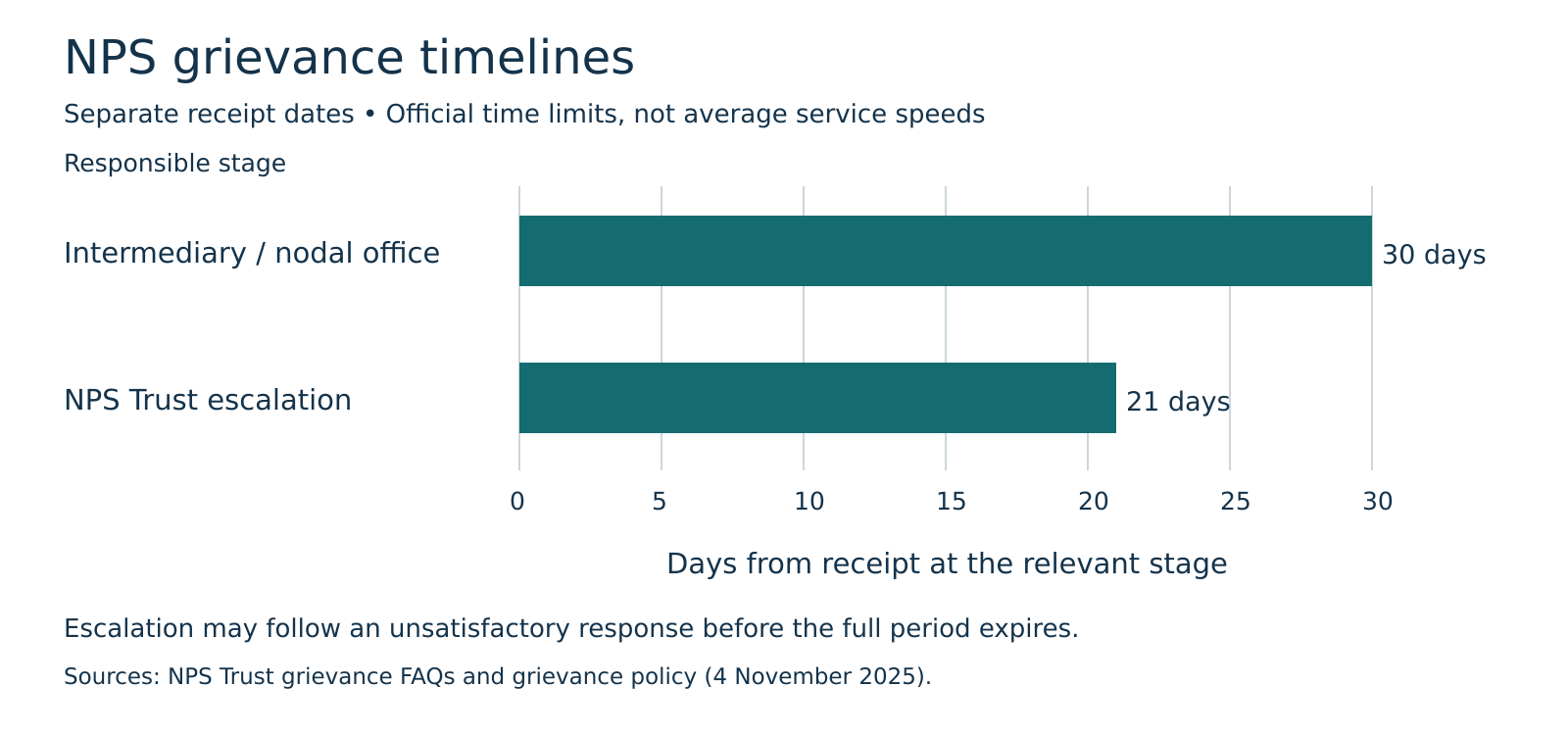
The chart’s horizontal axis shows days from receipt at the relevant stage. Its vertical axis identifies the responsible stage:
- Intermediary or nodal office: 30 days from receipt of the complaint.
- NPS Trust escalation: 21 days from receipt of the escalated grievance.
These are separate procedural timelines, not measured average resolution times or a guaranteed combined completion date. The practical inference is to record the receipt date at each stage. You may escalate after an unsatisfactory response; you do not need to wait out the full period in that situation. The NPS Trust grievance FAQs and November 2025 grievance policy (PDF) support these timelines.
Follow the escalation route
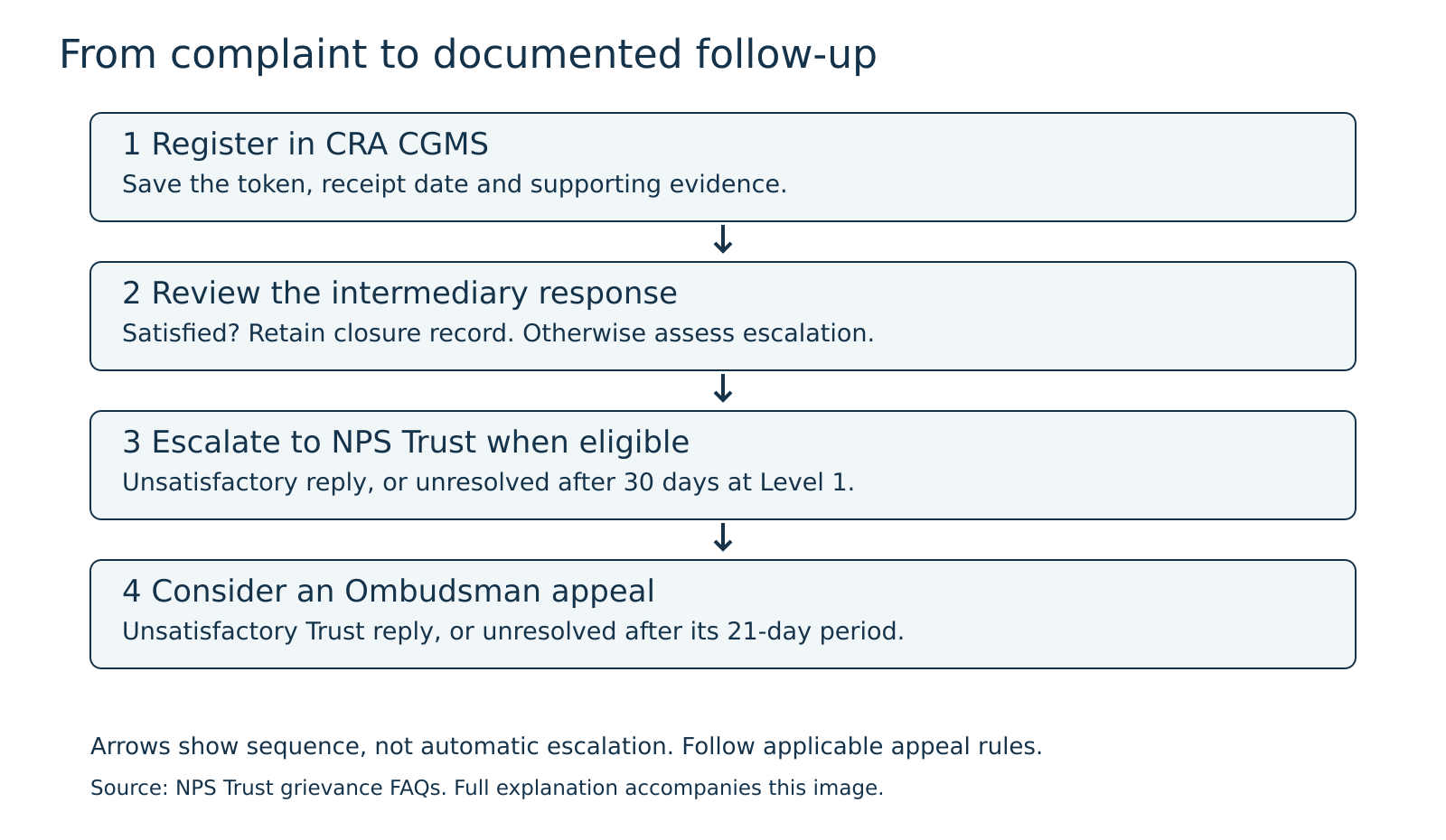
- Register and retain: lodge the CGMS complaint and save the token and evidence.
- Review the reply: compare the response with the problem you reported. If satisfactorily resolved, retain the closure record.
- Escalate to NPS Trust: use your CRA’s CGMS if dissatisfied with the intermediary’s resolution or if the complaint remains unresolved after 30 days.
- Consider an Ombudsman appeal: if dissatisfied with NPS Trust’s resolution or the grievance remains unresolved after its 21-day period, follow the applicable appeal procedure. Check the current requirements promptly through the official grievance guidance.
The arrows show the order of follow-up, not automatic escalation. Keep the same complaint history available as you move between stages.
Can Abhipra help with the process?
Abhipra has acted as a Point of Presence for 17 years. Its NPS Desk can help you understand the service route and supporting records for your query. Contact the Abhipra NPS Desk or visit NPS & Pension. Assistance does not replace the formal grievance process or guarantee a particular outcome.
Before you close the file
Check that the response addresses your actual request, retain the written reply and follow up promptly if an issue remains. A saved token, clear evidence and the correct escalation route are more useful than an unrecorded reminder.
Sources checked on 19 September 2026. Corporate photographs are original AI-generated illustrations, not photographs of actual customers or Abhipra premises. Chart values represent official procedural timelines, not service-performance data.
This article is for investor education, not legal, tax or investment advice. NPS is market-linked and subject to investment risks and applicable rules. Grievance and appeal procedures remain subject to current regulations and case-specific requirements.