How To Increase Or Decrease Your NPS Contribution Without Breaking The Routine

Changing your National Pension System contribution is not a sign that your retirement plan has gone off track. Income, expenses, bonuses and business cash flows can all move during the year. The useful habit is to adjust the contribution amount consciously, while keeping the account active and the long-term pension objective intact.
NPS gives this flexibility. Under the All Citizen Model, PFRDA says subscribers can make unlimited contributions to Tier I and Tier II accounts, with no upper limit. The contribution is then invested as per the pension fund and asset allocation recorded with the Central Recordkeeping Agency.
The Rule To Remember First
NPS is a market-linked defined contribution retirement scheme. Increasing the contribution can raise the amount invested toward retirement, but it does not guarantee a fixed return. Decreasing the contribution can help during a tight cash-flow period, but the Tier I account still needs the annual minimum discipline.
For most individual subscribers, the practical control is simple: know the minimums, choose the route, record the transaction, and review the statement.
| NPS account or route | Current minimum to remember | Practical meaning |
|---|---|---|
| Tier I | Rs 500 per contribution, Rs 1,000 per financial year, and at least one contribution in the financial year. | If you reduce monthly contributions, keep a calendar check so the annual minimum is still met. |
| Tier II | Rs 250 per contribution, with no minimum balance requirement stated by the CRA FAQ. | Useful for flexible additional savings, subject to having an active Tier I account. |
| D-Remit | Rs 500 minimum contribution through the virtual account route. | Can support regular bank instructions. NPS Trust states same-day NAV is available when the Trustee Bank receives funds before the specified working-day cut-off. |
How To Increase Your NPS Contribution
Start by deciding whether the increase is temporary or permanent. A bonus, arrear payment or annual incentive may suit a one-time top-up. A salary increment may suit a higher monthly instruction.
You can contribute through a Point of Presence, through the CRA or eNPS online routes, through the NPS mobile app, or through D-Remit. If you use D-Remit, the virtual account is added as a beneficiary in your bank account. NPS Trust currently states that the virtual account is normally available by the next working day after registration and that the minimum contribution through this route is Rs 500.
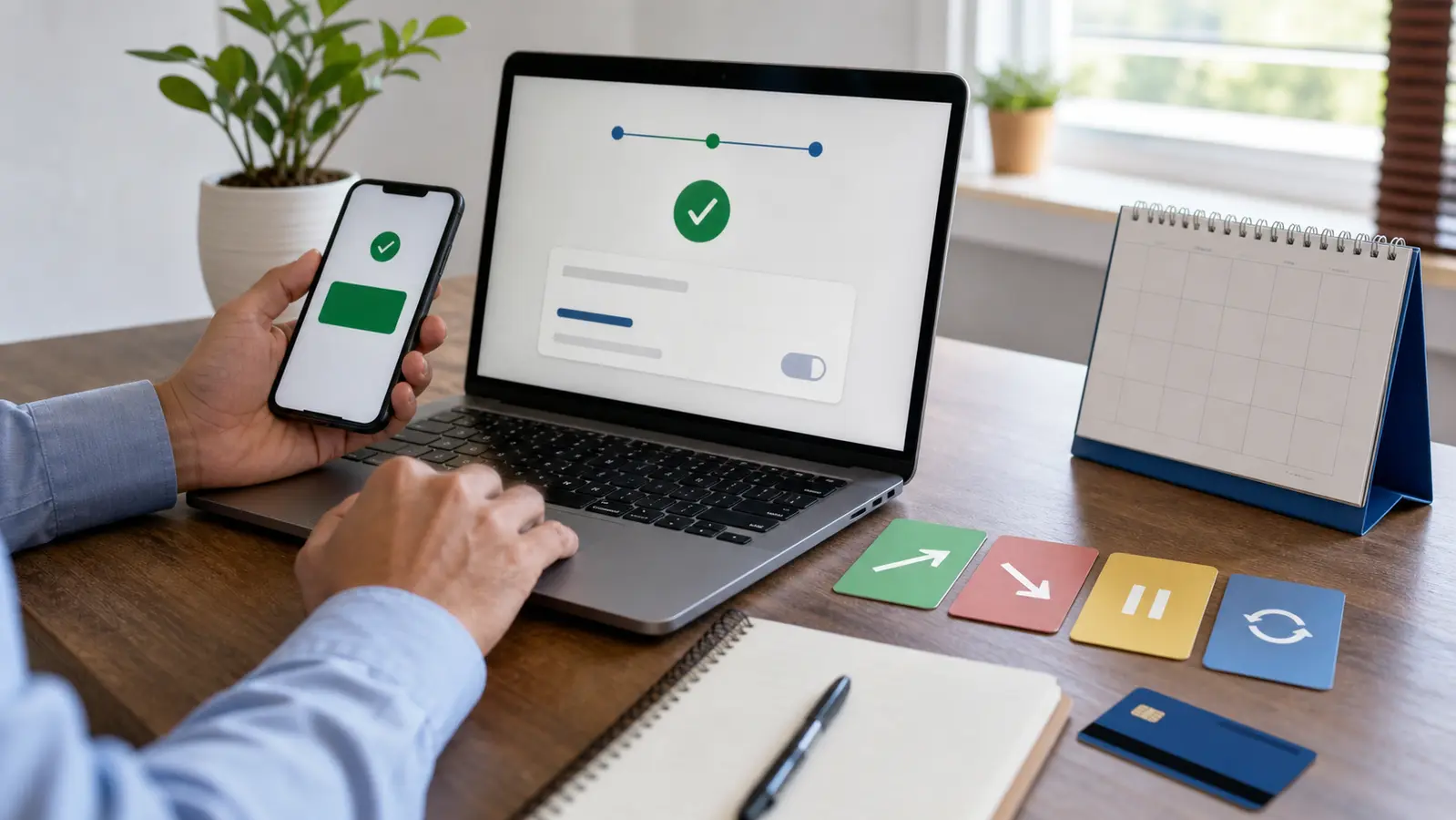
Before raising the amount, also review your asset allocation and pension fund choice separately. A higher contribution follows the investment choice already recorded in the CRA system unless you change that choice through the permitted process.
How To Decrease Your NPS Contribution
Reducing the contribution is better than abandoning the routine completely. If cash flow is tight, keep the Tier I annual minimum visible in your checklist and decide the lowest monthly amount you can maintain without stress.
A subscriber who contributes Rs 500 every month would contribute Rs 6,000 in a year before returns. That is above the current Tier I annual minimum of Rs 1,000, but the amount should still be checked against personal retirement goals, age, income stability and liquidity needs.
Contribution Ladder
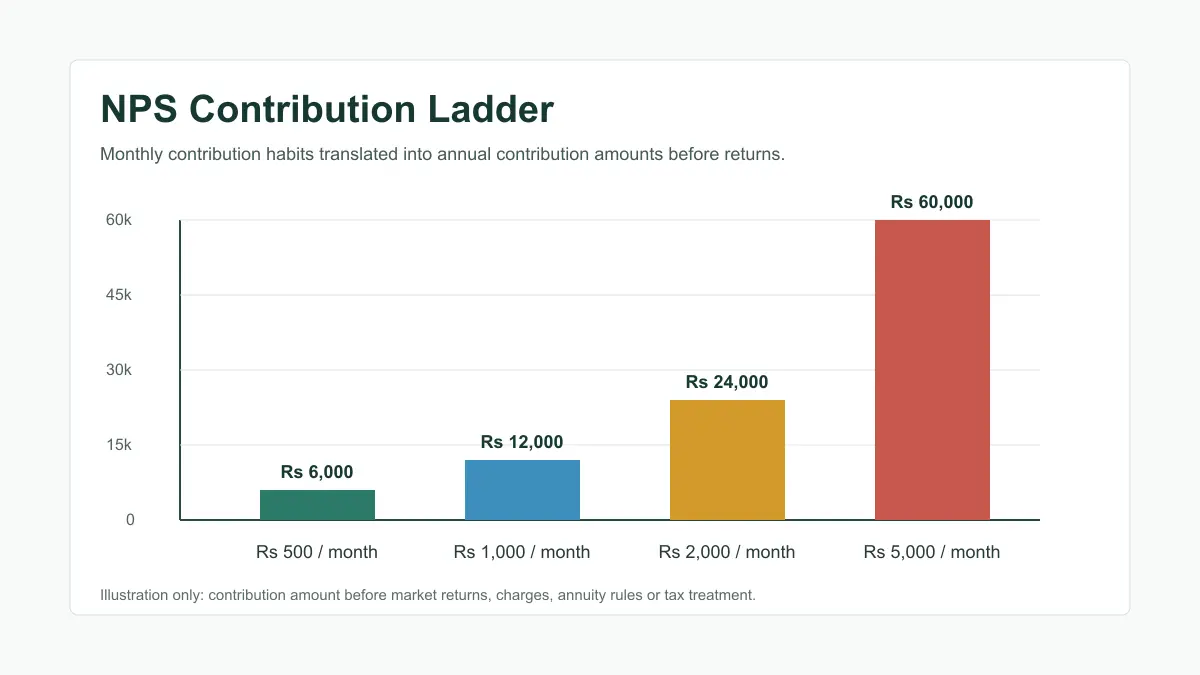
The table below repeats the chart data in text form. These examples are arithmetic contribution amounts only. They do not assume any market return, tax benefit, charges, annuity purchase or withdrawal outcome.
| Monthly NPS contribution habit | Annual contribution before returns | How to use this number |
|---|---|---|
| Rs 500 per month | Rs 6,000 per year | A low-friction habit that remains above the present Tier I annual minimum. |
| Rs 1,000 per month | Rs 12,000 per year | A simple monthly benchmark for salaried or self-employed subscribers beginning a pension routine. |
| Rs 2,000 per month | Rs 24,000 per year | Can be reviewed annually with salary growth, tax planning and retirement target assumptions. |
| Rs 5,000 per month | Rs 60,000 per year | A stronger pension-saving routine for subscribers with stable surplus cash flow. |
Practical Control Checklist
- Confirm your PRAN and whether you are contributing to Tier I, Tier II or both.
- Choose the contribution route: Point of Presence, online CRA or eNPS route, mobile app, or D-Remit.
- Keep the Tier I annual minimum of Rs 1,000 and at least one yearly contribution on your calendar.
- If using D-Remit, check the current Trustee Bank cut-off and bank processing time before relying on same-day NAV.
- Save the acknowledgement or transaction reference after contribution.
- Review the CRA statement and unit credit after settlement.
- Change pension fund or asset allocation separately if your risk profile has changed.
How Abhipra Can Help
Abhipra has acted as an NPS Point of Presence for 17 years, helping subscribers with NPS registration, contribution support and service requests. You can learn more on Abhipra's NPS and pension services page, open an NPS account online, or set up SIP in NPS.
FAQs
Can I contribute more than once in a year?
Yes. PFRDA's All Citizen Model information says subscribers can make unlimited contributions to Tier I and Tier II accounts, with no upper limit.
What happens if I decrease Tier I contributions too much?
You should still maintain the Tier I minimum contribution requirement. The Protean CRA FAQ currently states Rs 500 per Tier I contribution, Rs 1,000 per financial year, and at least one contribution in a financial year.
Is D-Remit same-day investment automatic?
No. NPS Trust currently states that same-day NAV through D-Remit depends on the Trustee Bank receiving funds before the specified working-day cut-off. Bank processing time can affect the final outcome.
Does increasing my NPS contribution guarantee higher returns?
No. NPS is a market-linked defined contribution scheme. A higher contribution increases the amount invested, but returns depend on market performance, scheme choice, charges and applicable regulations.
Sources
- PFRDA: NPS for All Citizen Model
- NPS Trust: Activate D-Remit
- NPS Trust: About NPS
- Protean CRA: Contribution FAQ
- Press Information Bureau: D-Remit QR code facility
This article is for investor education only and is not investment advice. NPS rules, cut-offs, charges and tax treatment can change. Subscribers should verify the latest information with PFRDA, NPS Trust, the CRA, the Point of Presence or a qualified adviser before acting.