Fundamental Analysis for Beginners: Read the Business Before the Stock Price
A stock price moves every second. A business changes more slowly. Fundamental analysis is the habit of studying the business before reacting to the price.
For a beginner, the aim is not to become a professional analyst overnight. The aim is simpler: avoid buying a share only because it is popular, rising fast, or being discussed on social media.

Start With The Business, Not The Chart
Before looking at valuation ratios or price movement, ask what the company actually does.
Can you explain the product, customer, revenue source and industry risk in plain language? If the answer is no, the first task is not buying. The first task is reading.
Useful beginner questions are:
- What does the company sell?
- Who are its customers?
- Is revenue dependent on one product, one geography or one client group?
- Is the business cyclical, regulated, commodity-linked or highly competitive?
- Does the annual report explain risks clearly, or does it only sound promotional?
This step reduces a common retail-investor mistake: treating the share as a ticker symbol instead of ownership in a business.
The Five Checks Every Beginner Should Learn
Fundamental analysis can feel large because companies publish many documents. A beginner can start with five checks: sales, profit, debt, cash flow and governance.
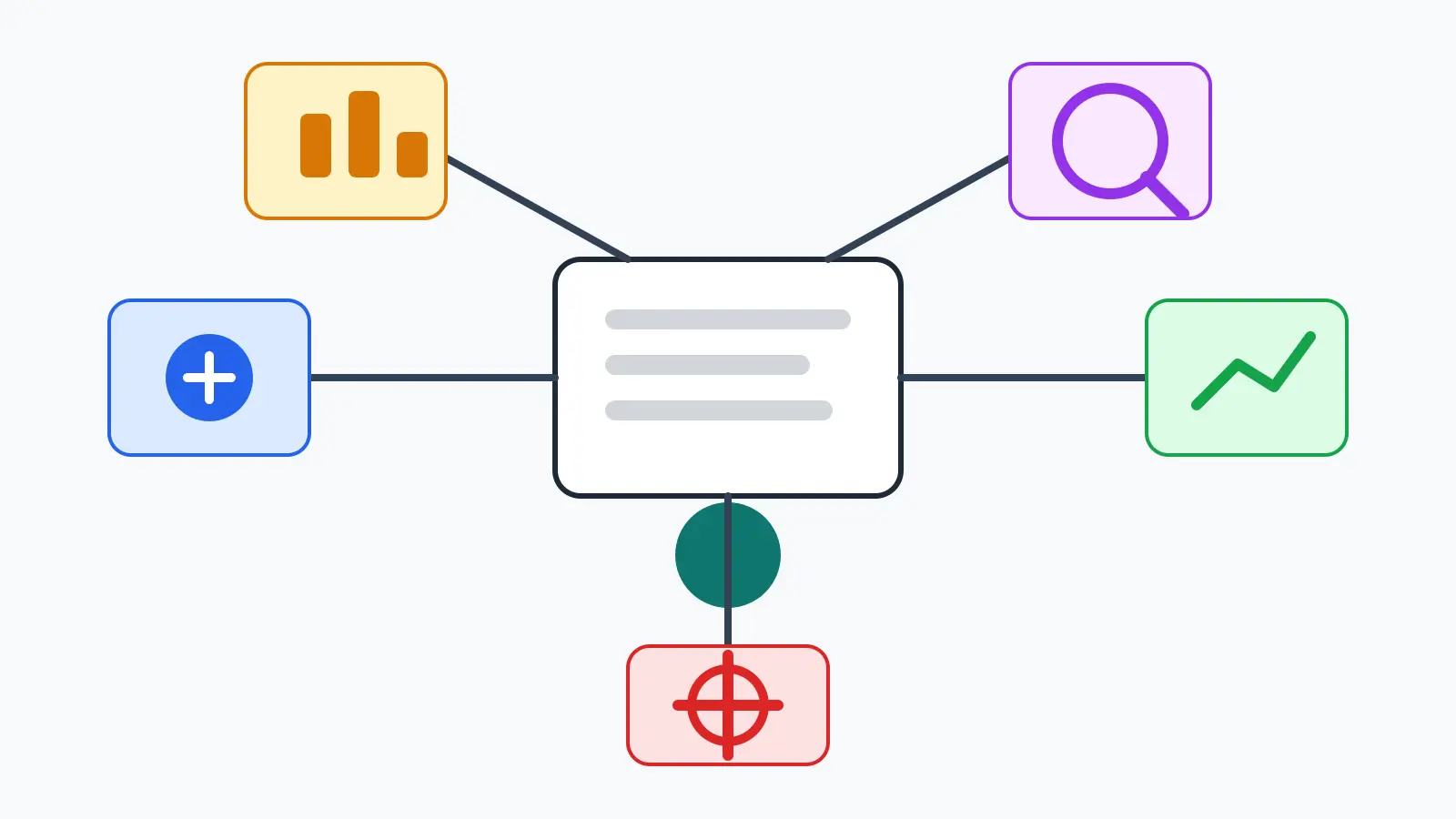
The visual connects one company file to five evidence areas. In practice, the investor should read revenue trend, profitability, borrowing, cash generation and governance disclosures together instead of depending on one headline number.
| Check | What to look for | Where to verify |
|---|---|---|
| Sales | Whether revenue is growing, stable, seasonal or falling. | Quarterly financial results, annual report and exchange filings. |
| Profit | Whether profit comes from the core business or one-time gains. | Statement of profit and loss, notes to accounts and result commentary. |
| Debt | Whether borrowing is manageable for the company's business cycle. | Balance sheet, finance-cost notes, credit-rating announcements and exchange filings. |
| Cash flow | Whether accounting profit is supported by operating cash generation. | Cash-flow statement and working-capital notes. |
| Governance | Promoter holding, pledge, related-party transactions, auditor remarks and board quality. | Shareholding pattern, corporate announcements, annual report and exchange disclosures. |
Use Official Filings Before Opinions
SEBI's investor website and exchange investor-education resources are useful starting points for investor awareness. For company-specific facts, use exchange filings and company disclosures before relying on social media posts, informal screenshots or forwarded messages.
For listed companies, investors can review financial results and corporate filings on official exchange sources such as the NSE financial-results filing page, NSE shareholding-pattern filing page, and BSE corporate-results filing page.
The discipline is simple: opinion can help you ask questions, but filings should answer them.
Common Beginner Mistakes
Avoid these shortcuts:
- Buying only because the price has fallen from a previous high.
- Assuming a low price means the stock is cheap.
- Looking only at profit and ignoring debt or cash flow.
- Ignoring auditor remarks, pledges, related-party transactions or frequent equity dilution.
- Comparing companies from different industries using one ratio.
- Treating one strong quarter as proof of a long-term turnaround.
Fundamental analysis is not a guarantee of profit. It is a filter to avoid weak reasoning.
A Practical First Research Routine
For a new investor, a simple routine is enough:
- Read the latest annual report summary and management discussion.
- Compare the last few quarterly results to see direction, not just one number.
- Check debt, finance cost and operating cash flow.
- Review shareholding pattern and major corporate announcements.
- Write down the reason for investing and the risks that can prove the thesis wrong.
- Do not invest if the business remains unclear after reading official sources.

The desk review shows how a beginner can structure research: collect company filings, separate financial statements from governance disclosures, compare trend evidence, mark unanswered questions, and decide whether more reading is needed before any investment decision.
How Abhipra Can Help
Investors who want to understand demat account usage, equity-investing process, portfolio documentation or research discipline can connect with Abhipra for process guidance.
Review Abhipra's services or connect through the Abhipra contact page.
Reviewed by Abhipra Research / Compliance Team.
Source Links
Sources checked on July 9, 2026:
- SEBI Investor Website
- BSE Investor Education
- NSE corporate filings: financial results
- NSE corporate filings: shareholding pattern
- BSE corporate results
Disclaimer
This article is for educational and informational purposes only. It is not investment advice, research advice, tax advice or a recommendation to buy, sell or hold any security. Equity investments are subject to market risk. Investors should verify current disclosures, evaluate suitability, and consult qualified advisers before making investment decisions.