
NPS Asset-Class AUM: What the M6 Data Shows—and What It Cannot Tell You
PFRDA’s M6 dataset groups pension-fund portfolio assets into broad classes. It is useful for understanding the system’s reported exposure, but it cannot tell a subscriber which allocation is suitable or predict a return.

The reported asset-class snapshot
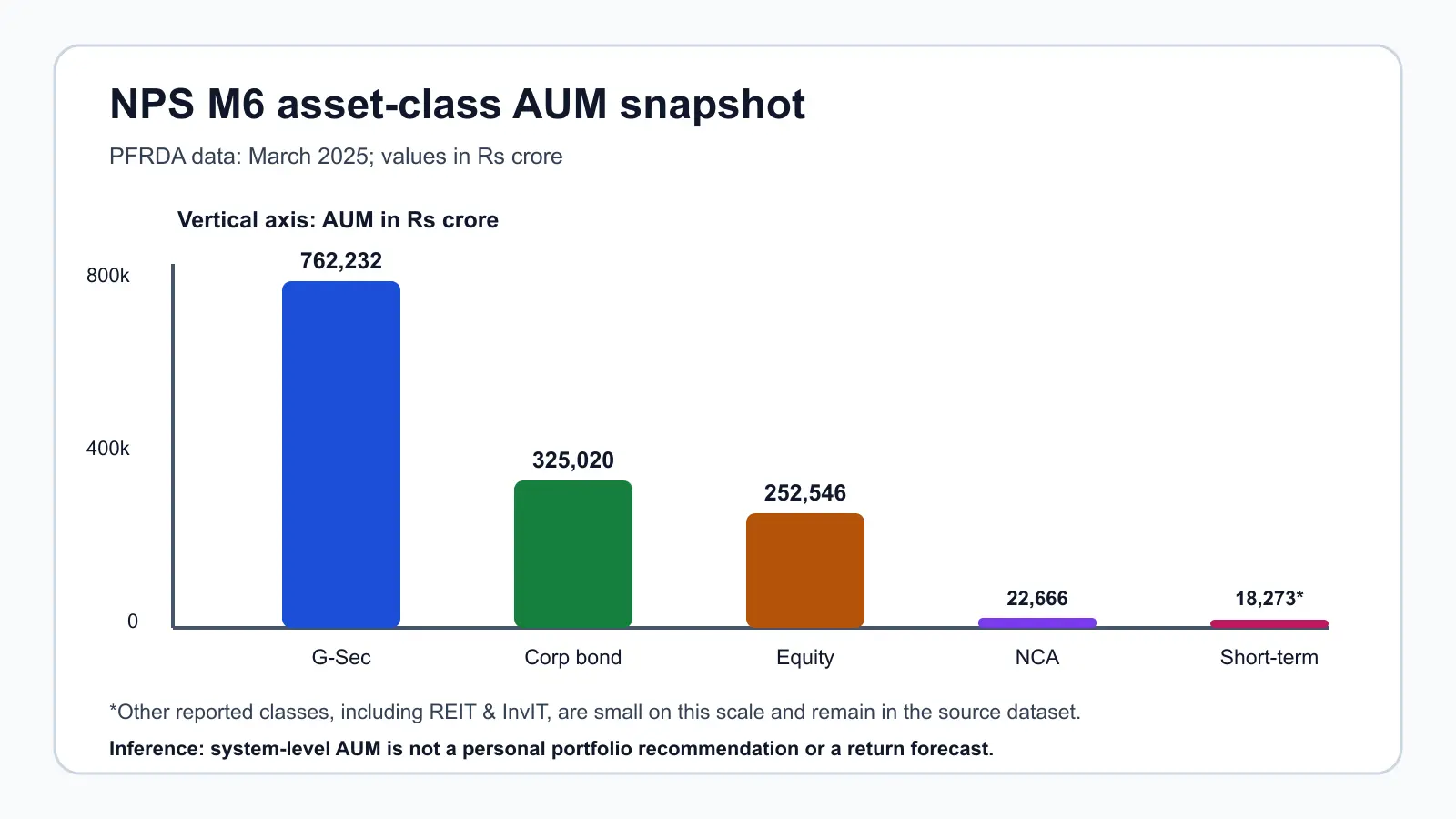
The vertical axis is AUM in Rs crore; the horizontal axis is the reported asset class. The M6 values for March 2025 include Government Securities Rs 762,231.61 crore, Corporate Bonds Rs 325,019.85 crore, Equity Rs 252,546.44 crore, NCA Rs 22,665.94 crore, REIT & InvIT Rs 2,290.13 crore and Short-Term Investments Rs 18,273.37 crore.
The inference is narrow: these are system-level reported holdings for a point in time. They are not a return ranking, a measure of safety for an individual account, or a reason to copy a system mix into a personal NPS choice.
A safer way to use portfolio data
- Match any allocation review to your age, horizon, liquidity needs and ability to tolerate market movement.
- Read the scheme and account records, rather than using a headline system number as a decision rule.
- Keep your contribution and statement records; compare like-for-like scheme dates before drawing conclusions.
- Use an authenticated CRA or verified PoP channel for changes. Never share an OTP, password or login credential.
Abhipra has acted as a Point of Presence for 17 years. For NPS service information, visit Abhipra NPS & Pension services. Eligible readers can use Abhipra’s NPS account-opening route or Abhipra’s NPS SIP route.
Source links and disclaimer
- PFRDA M6 asset-class classification — current data refresh and portfolio-data notes.
- PFRDA: About NPS — NPS architecture and market-linked structure.
This is investor education, not individual investment, tax or legal advice. NPS is market-linked and rules and portfolio values can change.